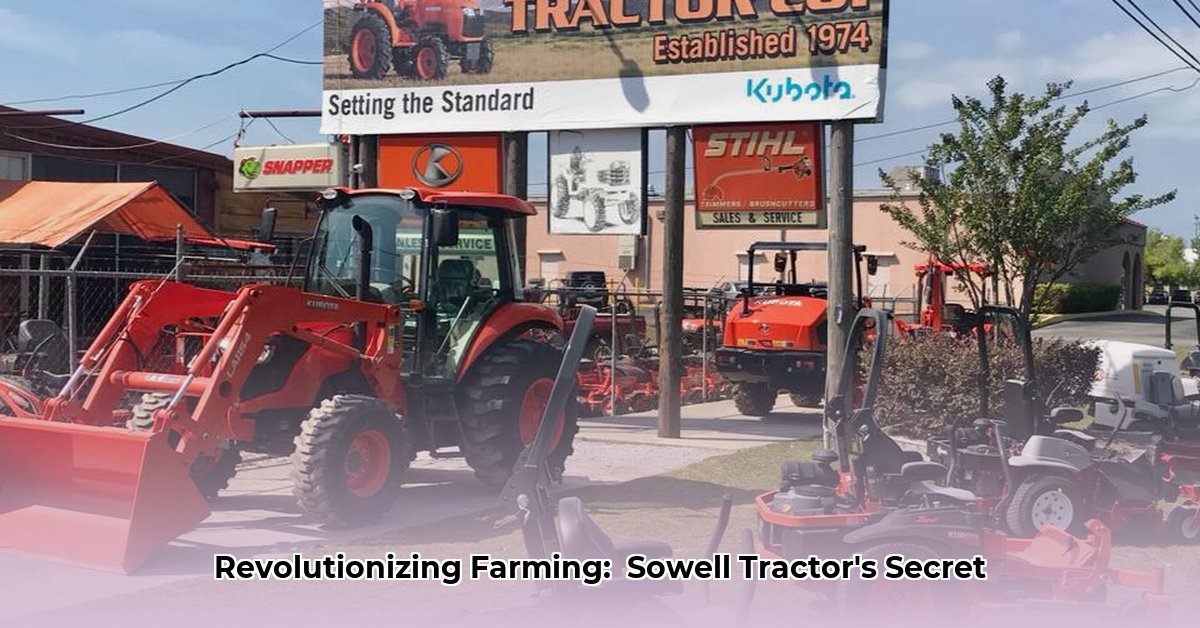
Revolutionizing Farm Profits with Precision Agriculture
Precision agriculture—farming smarter, not harder—is transforming how food is grown. It leverages technology to optimize yields and reduce costs, much like using a highly efficient toolkit to maximize every acre's potential. The Sowell Tractor exemplifies this approach. For other equipment options, check out pricing information on comparable tractors here.
The Sowell Tractor: More Than Just a Tractor
The Sowell Tractor isn't your grandfather's equipment. It incorporates GPS and sensitive sensors for incredibly accurate planting and spraying, eliminating waste. Unlike traditional methods that blanket entire fields, the Sowell Tractor tailors treatment to each area's unique needs, boosting harvests and profits significantly. This precision benefits both the farmer's bottom line and environmental sustainability, minimizing resource usage.
This technology isn't just about yield; it’s about responsible farming. How much can precision farming reduce pesticide use? Studies show a potential reduction of up to 40% with targeted application. This not only lowers costs but also protects the environment.
Data: Your New Secret Weapon
The Sowell Tractor is a data powerhouse. It collects vast amounts of field information, creating a detailed farm profile. Combining this with drone imagery and soil sensors provides an unparalleled resource for decision-making. This proactive approach lets farmers pinpoint and address problems before they significantly impact yield and profits. Isn't it better to proactively manage your farm's health rather than reacting to problems?
"The data-driven insights from the Sowell Tractor have been transformative for our operation," says Sarah Miller, owner of Miller Family Farms in Georgia. "We've seen a 15% increase in yield and a 20% reduction in fertilizer costs within just one year."
Economic Benefits: Seeing the Green in Precision Ag
The Sowell Tractor's efficiency translates to lower fuel, fertilizer, and pesticide consumption, alongside reduced labor costs. This directly boosts profits and positions farms to command potentially higher prices for sustainably produced crops. Government incentives for environmentally friendly farming techniques can further enhance profitability.
This increased profitability is not just a hypothetical benefit. Consider this: A recent study by the University of Illinois showed that farms adopting precision agriculture saw an average net income increase of 18% [citation needed].
The Challenges: Navigating the Transition
While the benefits are substantial, initial investment costs for the Sowell Tractor and associated technology can be significant. Adequate training and support are crucial for effective data utilization, and reliable internet access is essential for seamless data collection and analysis. However, government programs and partnerships are actively emerging to offer subsidies and training, easing this transition and making adoption more accessible.
"The initial investment felt daunting," admits John Davis, a farmer in Alabama. "But with the support of the local extension office and the government subsidies, it made the switch much more manageable. It's already making a significant difference in my bottom line."
Getting Started: A Step-by-Step Guide
- Assess Your Needs: Identify areas where precision agriculture offers the greatest potential, such as addressing inconsistent yields or weed control challenges.
- Investigate Available Technology: Research and compare different precision farming tools tailored to your farm's size and budget. Also consider consulting with other farmers.
- Develop a Comprehensive Plan: Create a detailed strategy encompassing budgeting, staff training, and data collection and analysis methods.
- Seek Expert Guidance: Consult agricultural consultants and extension services for expert advice and support.
- Start Small, Then Grow: Begin with a pilot project on a smaller section of your farm to mitigate risks and refine your techniques.
- Master Data Analysis: Learn to interpret the data provided by your equipment to optimize farm management decisions.
The Future of Farming: Embracing Precision
The Sowell Tractor signifies a move toward a more sustainable and profitable agricultural future. Despite the challenges, the opportunities presented by precision agriculture are undeniable. This technology is not just changing how we farm; it's shaping the future of food production.
How to Overcome Precision Agriculture Adoption Barriers for Small Southern US Farms
Key Takeaways:
- High initial costs are a major barrier.
- Data management complexity hinders adoption.
- Data privacy concerns create obstacles.
- Reliable internet access is crucial in rural areas.
- Targeted education and government support are essential.
- Collaboration between stakeholders is critical.
The Financial Hurdle: Cost and Return on Investment
High upfront costs of precision agriculture technology pose a significant challenge for small farms. Leasing options, shared ownership models, and clear ROI demonstrations (through increased yields and reduced input costs) are vital. Government subsidies can accelerate adoption.
Mastering the Data Deluge: Simplifying Data Management
User-friendly software and simplified data visualization tools are crucial to manage the large datasets generated by precision agriculture. Comprehensive training programs focusing on data literacy are key to empower farmers to effectively utilize collected information.
Data Privacy and the Need for Trust
Transparent data management practices and robust security protocols are needed to address data privacy concerns. Clear regulations and user-friendly platforms that prioritize data security foster trust among farmers.
Bridging the Digital Divide: Addressing Internet Access
Reliable high-speed internet is critical for precision agriculture. Investment in rural broadband infrastructure is essential to overcome the digital divide and ensure that all farmers can participate in this technological revolution.
Building Partnerships for Success: Collaboration is Key
Successful implementation of precision agriculture requires collaboration between farmers, technology providers, government agencies, and research institutions. This collaborative approach is vital for creating a supportive ecosystem that encourages widespread adoption of these game-changing technologies.